

The Lithostratigraphic Lexicon of Switzerland is currently being transferred to the swissgeol platform, with a broader range of topics. As part of this process, the website www.strati.ch will be closed at the end of 2026.
The standard geological terminology used by the Swiss Geological Survey is now available at the following address: https://lexic.swissgeol.ch/. The corresponding content will be gradually revised and expanded. Moreover, a deeper integration with the available datasets produced by swisstopo will enable us to gradually introduce new search and analysis features.
If you have any questions, comments or suggestions, please do not hesitate to contact us: swissgeol(at)swisstopo.ch
Reischiben-Formation
Back to Blegi-EisenoolithRepresentation and status
- Index
- a2-i3
- Color CMYK
- (0%,15%,32%,8%)
- Color RGB
- R: 235 G: 200 B: 160
- Rank
- lithostratigraphic Formation
- Validity
- Unit is in Use
- Status
- valid formal name
- Scs Note
-
Bewilligt
- Scs Date
- 17.05.2002
Nomenclature
- Deutsch
- Reischiben-Formation
- Français
- Formation de la Reischiben
- Italiano
- Formazione della Reischiben
- English
- Reischiben Formation
- Origin of the Name
-
Hügel Raischibe (SG), S Walenstadt
- Historical Variants
-
Raischiben-Serie (Dollfus 1965), Reischiben-Serie (Spörli 1966, Bissig 1997), Reischiben-Formation (Menkveld 1995)
- Nomenclatorial Remarks
-
Spatkalk (Scabell 1926), Echinodermenbrekzie (Oberholzer 1933), Calcaires spathiques (niveau marneux à oolites ferrugineuses inclus) (Bl. Sierre), Bajocien supérieur = calcaires spathiques à chailles (Plancherel 1998)
Description
- Description
-
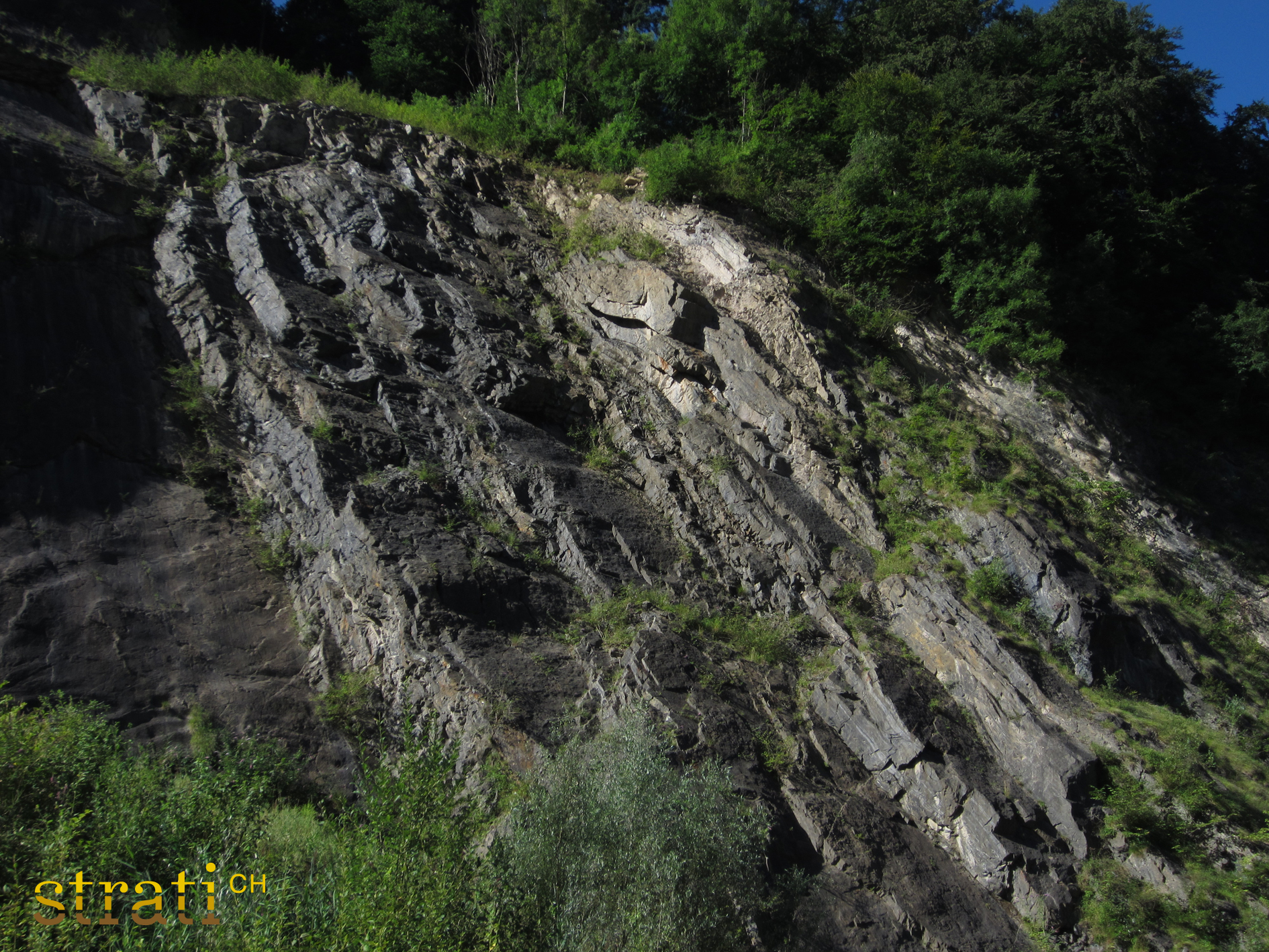
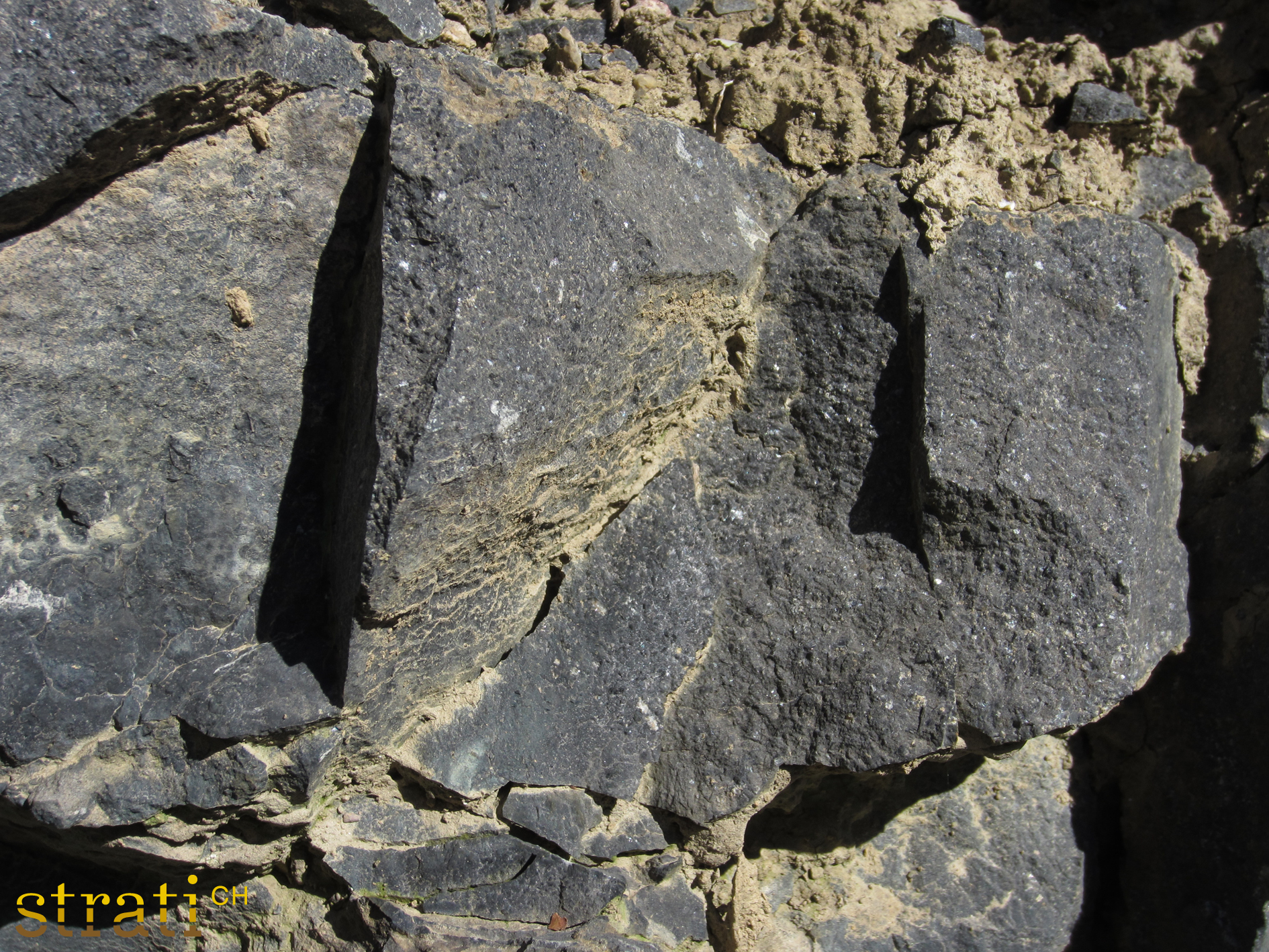
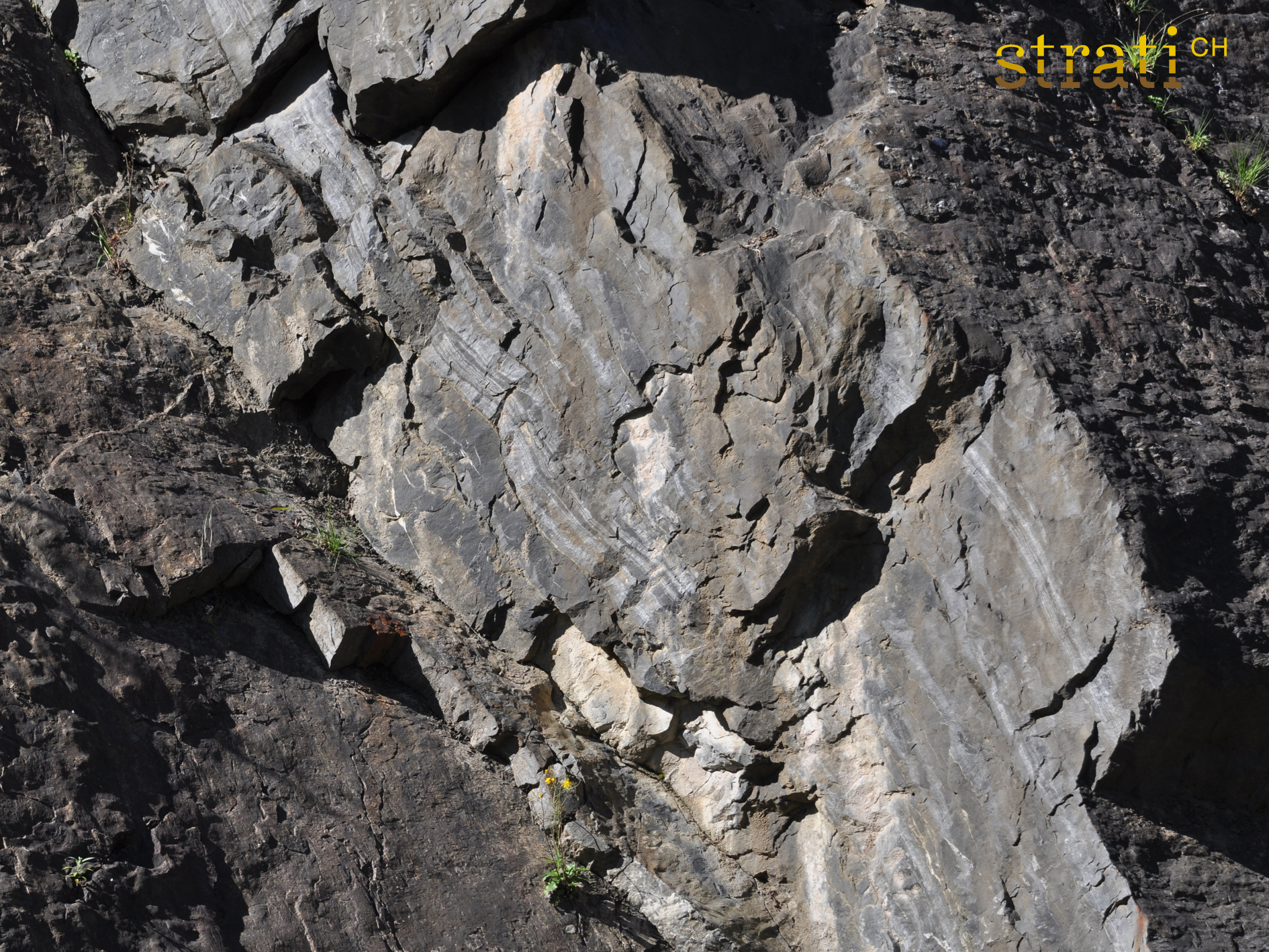
Massige, grau anwitternde Abfolge von schräggeschichtetem, sandigem Kalk und Spatkalk mit grauer oder roter Echinodermebrekzie, sowie untergeordnetem Mergelkalk.
- Thickness
- Wenige cm (Autochthon) bis 40 m (an Typuslokalität ausnahmsweise ca. 120 m); 5 - 10 m im Bundstock-Element (Zwahlen 1993) ; The maximum thickness is about 80 m, and the unit pinches out to the northwest. (Rowan 1993)
Components
- crinoids
- belemnites
- pectinids
- bivalves
Hierarchy and sequence
- Subordinate units
- Units at roof
- Units at floor
- Upper boundary
-
Die obersten Bänke sind durch Phosphorit, Chlorit und Silex imprägniert und enthalten Belemniten, Pectiniden u.a. Bivalven. (Zwahlen 1993)
- Lower boundary
-
Lokal fehlen die Schwarzhorn-Schichten (Hochstollen-Formation) stratigraphisch.
Age
- Age at top
-
- earliest Bathonian
- Age at base
-
- late Aalenian
- Dating Method
-
Biostratigraphie: Ammoniten v.a. im obersten Teil der Formation (Kondensationshorizonte des mittleren-späten Bajocians: subfurcatum- und garantiana-Zone).
Geography
- Geographical extent
- Ost- und Zentralschweizer Helvetikum, im Westen verzahnt mit der altersgleichen Hochstollen-Formation.
- Type area
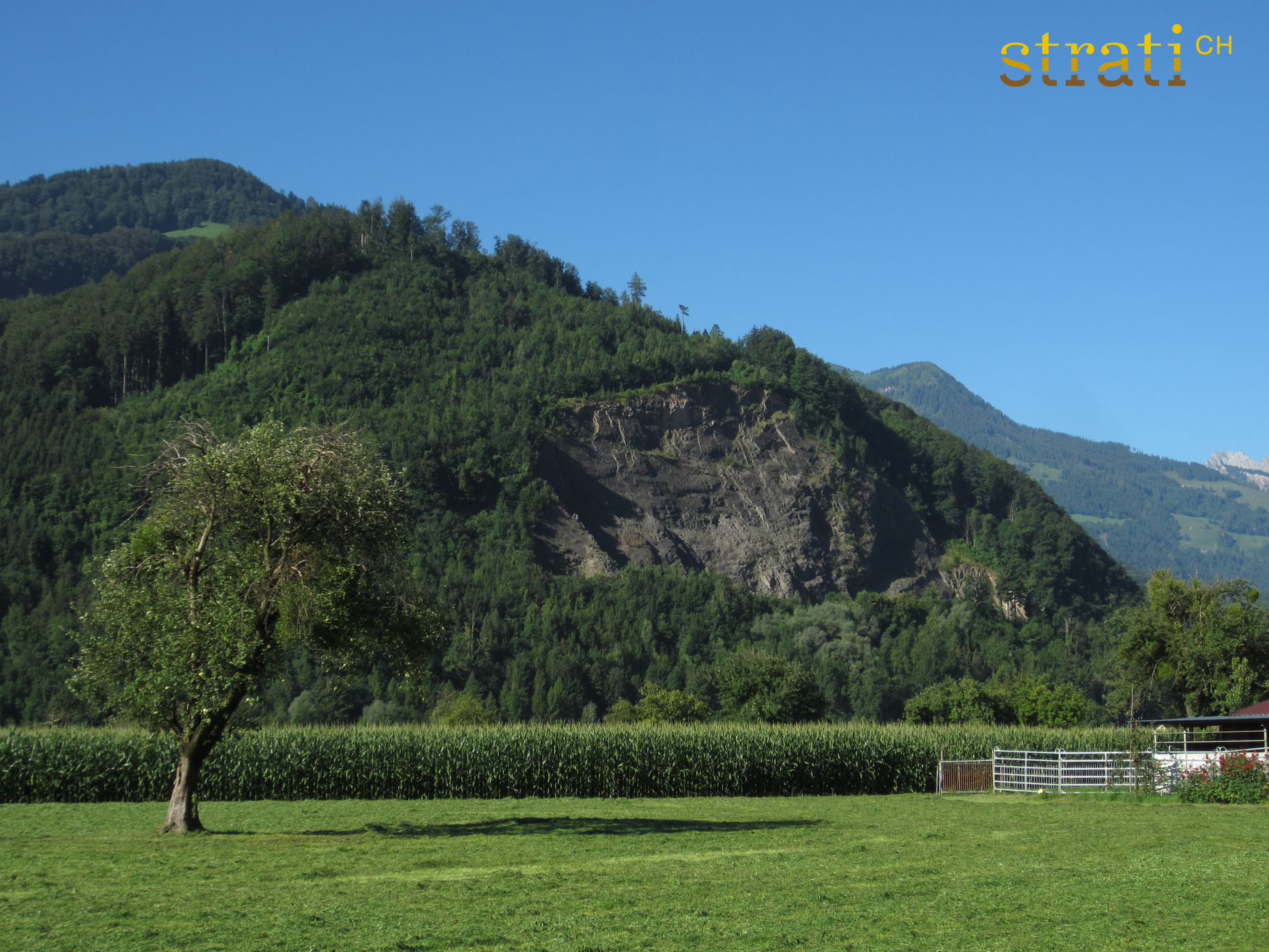
- Walenseegebiet
- Type profile
-
-
Hügel Raischibe S Walenstadt
Coordinates- (741150 / 219950)
- Obergrenze fehlt
-
Hügel Raischibe S Walenstadt
Palaenography and tectonic
-
- Jurassic
- Dogger
- Paleogeography
-
North Tethyan Shelf
:
marge continentale européenne - Tectonic unit (resp. main category)
-
- Helvétique occidental
- Axen
-
Östliches Helvetikum
:
u.a. Glarner Alpen - Wildhorn-DK
- Aar
- Kind of protolith
-
- sedimentary
- Conditions of formation
-
Flachwasserablagerung des Helvetischen Schelfs mit starken Strömungen sowie Hartgrundbildung im Dach der Formation.
- Metamorphism
- non metamorphic
References
- Definition
-
(1965) :
Über den helvetischen Dogger zwischen Linth und Rhein. Eclogae geol. Helv. 58/1, 453-554
S.463: Reischiben-Serie (nach dem Reischibenhügel S Walenstadt). Echinodermenbreccie auct., graue Echinodermenbreccie Schindler. Alter: (unteres?), mittleres bis oberes Bajocian.
a) untere sandige Kalke; b) graue Echinodermenbreccie s.s.; c) oberer Spatkalk (nur lokal); im Dach: Fossilhorizont von Guppen (selten oder nur andeutungsweise in den östlichen Glarner Alpen; wird in der Alviergruppe ersetzt durch die Gurbsbachfossilschicht (Arn. Heim, W. Bircher).
Material and varia
-
Blegi-Eisenoolith
- Name Origin
-
Alp Oberblegi (GL) am Ostfuss des Glärnisch [ethymologisch: Blegi, Bläje, Blaje = Mittelalterischer Blasofen zur Roheisenherstellung]
- Rank
- lithostratigraphic Member (Subformation)
- Status
- valid formal name
- Nomenclatorial Remarks
- <p>Callovien auct., Callovien-Parkinsoni Eisenoolith (Seeber 1911), Eisenoolith-Kalk (Heim 1917), Callovien-Eisenoolith (Scabell 1926), Eisenoolith des Callovien (Furrer 1938)</p>
- In short
-
Meist geringmächtiges, kondensiertes, eisenoolithreiches Kalkband, welches z.T. das zeitliche Äquivalent der Erzegg-Formation darstellt.
- Age
- late Bajocian
-
Bannalp-Konglomerat
- Name Origin
- Rank
- lithostratigraphic Bed
- Status
- local name (informal)
- In short
- Schwarzgraue, dolomitisierte, mergelige Grundmasse mit Fossilien- und Gesteinsbruchstücken im Dach der Reischiben-Formation.
- Age
- late Bajocian
-
Guppen-Fossilhorizont
- Name Origin
-
Guppen Oberstafel (GL), in der Nähe des Hexensteins
- Rank
- lithostratigraphic Bed
- Status
- local name (informal)
- In short
-
Kondensationshorizont im Dach der Reischiben-Formation.
- Age
- late Bajocian
-
Gurbsbach-Fossilhorizont
- Name Origin
-
Gurbsbach (SG), Seeztal
- Rank
- lithostratigraphic Bed
- Status
- unknown status
- Age
- late Bajocian