
The Lithostratigraphic Lexicon of Switzerland is currently being transferred to the swissgeol platform, with a broader range of topics. As part of this process, the website www.strati.ch will be closed at the end of 2026.
The standard geological terminology used by the Swiss Geological Survey is now available at the following address: https://lexic.swissgeol.ch/. The corresponding content will be gradually revised and expanded. Moreover, a deeper integration with the available datasets produced by swisstopo will enable us to gradually introduce new search and analysis features.
If you have any questions, comments or suggestions, please do not hesitate to contact us: swissgeol(at)swisstopo.ch
Schrattenkalk-Formation
Back to Aubrig-SchichtenRepresentation and status
- Index
- c4-5
- Color CMYK
- (30%,0%,13%,22%)
- Color RGB
- R: 140 G: 200 B: 175
- Rank
- lithostratigraphic Formation
- Validity
- Unit is in Use
- Status
- informal term
- Scs Note
-
Angenommen
- Scs Date
- 19.10.2006
- Status discussion
Nomenclature
- Deutsch
- Schrattenkalk-Formation
- Français
- Formation du Schrattenkalk
- Italiano
- Formazione dello Schrattenkalk
- English
- Schrattenkalk Formation
- Origin of the Name
-
Schratte ("zerissen"): Karre, wie am Schratteflue (LU) (früher "Schrattenfluh" geschrieben)
- Historical Variants
-
Calcaires urgoniens auct., Schrattenkalk (Studer 1834, de Quervain 1969, Tollmann 1985), Schrattenschichten (Kaufmann 1872), Urgon-Apt = Schrattenkalk = Riffacies der Barrême- und Aptienstufe (Baltzer 1906), Schratten Schichten = Urgonien (GK100), Urgonfazies, Schratten Limestone, calcaires récifaux urgoniens (Maire 1977), Calcaires du Schratten, Schrattenkalk Formation (Föllmi et al. 2007)
- Nomenclatorial Remarks
-
Stellt die «Urgonfazies» des Helvetikums dar.
Description
- Description
-
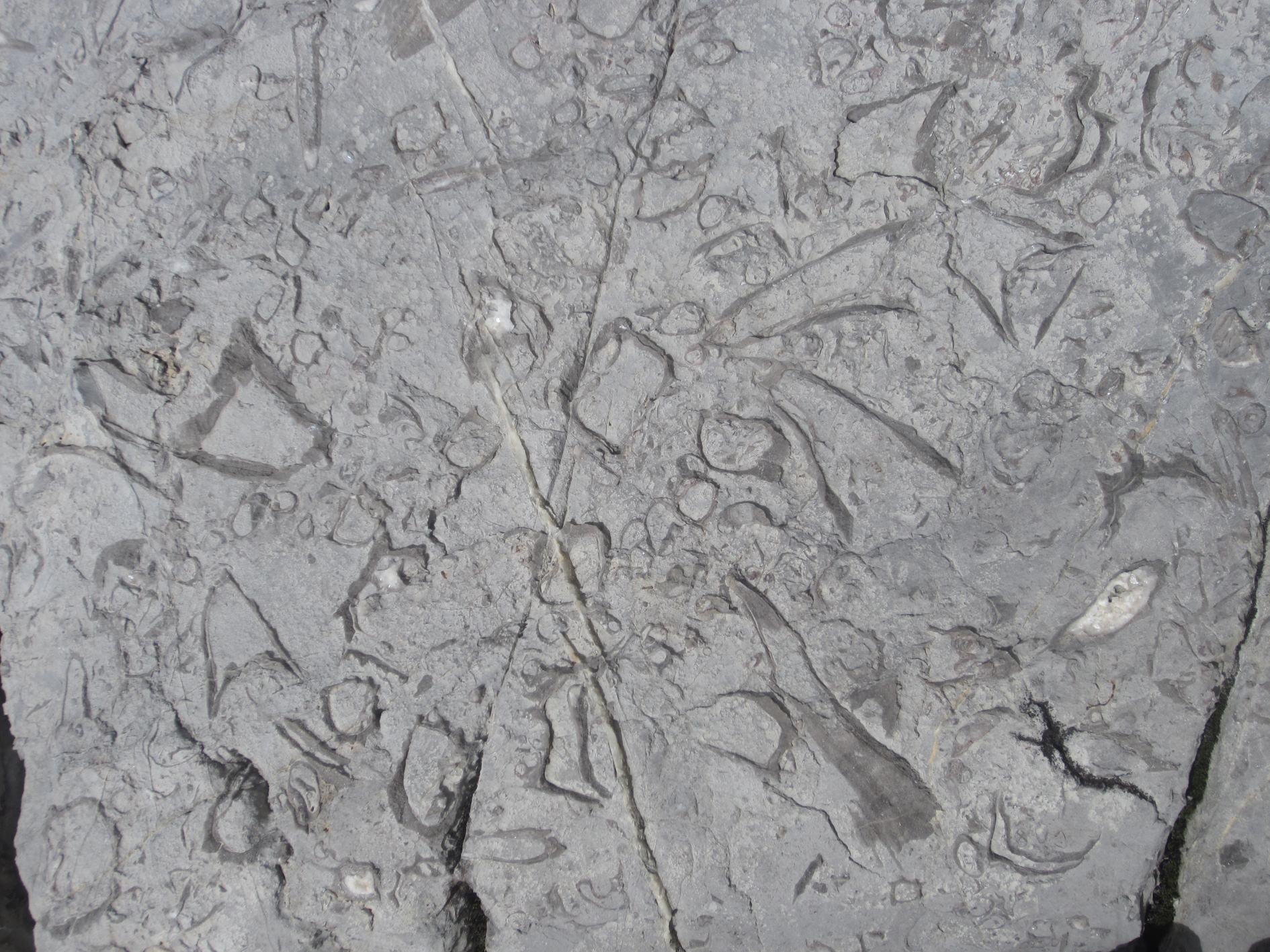
Bioklastische bis oolithische Flachwasser-Kalke. Gelegentlich Mergel-Einschaltungen: Rawil-Member (ehem. «untere Orbitolinenschichten»).
- Geomorphology
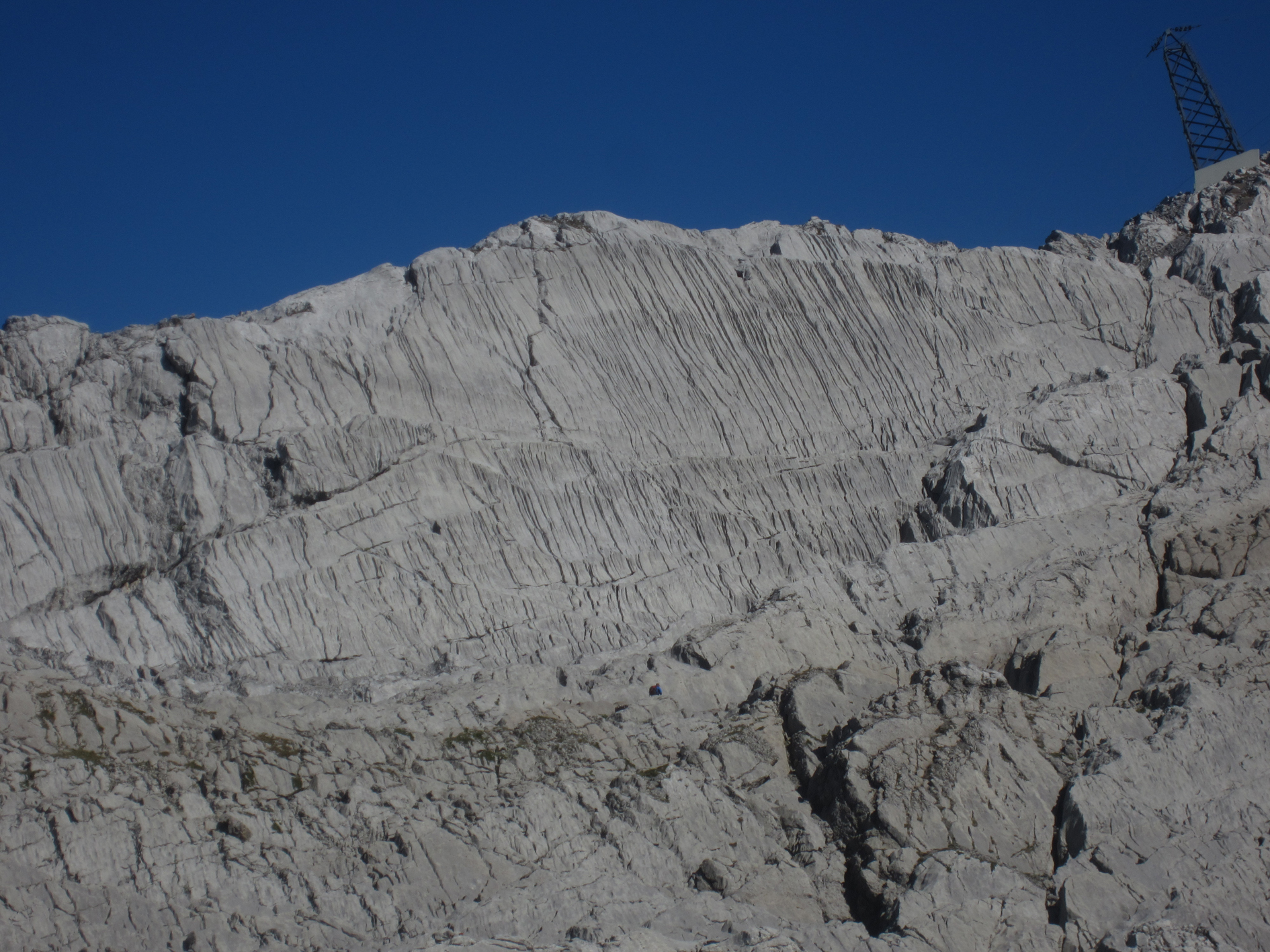
- Helle schroffe Felswände (Hoher Kasten) oder karstifizierten Flächen (Schratteflue, Lapiès de Tsanfleuron et de Cheville).
- Thickness
- 70-200 m, bis max. 300 m; bis über 200 m (Föllmi et al. 2007)
Components
- rudists
- corals
- gastropods
- foraminifera
- echinoids
- bivalves
- bryozoans
Requienia ammonia Goldfuss, Toucasia carinata Matheron, Radiolites, Caprina, Alyctryonia rectangularis Roemer, Exigyra, Orbitolina lenticularis
Hierarchy and sequence
- Units at roof
- Units at floor
- Upper boundary
-
Scharfe, erosive (z.T. auch gebohrte) Grenze zu den Grünsandsteinen der Garschella-Formation.
Age
- Age at top
-
- Early Aptian
- Note about top
-
evt. bis frühestes Spät-Aptien
- Age at base
-
- Late Barremian
- Note about base
-
"...diachronous late Barremian onset following a SE-ward progradation." (Pictet et al. 2018)
- Dating Method
-
Biostratigraphie: benthon. Foraminiferen, Ammoniten im Grünten-Member und in der Luitere- Bank
Geography
- Geographical extent
- Ganze Schweiz, Vorarlberg (A), Allgäu (D). Bildet u.a. den Gipfel des Wildhorns.
- Type area
- Zentralschweiz [Drusberg-Decke]
- Type locality
-
-
Schrattenflue (LU)
Coordinates- (2642350 / 1189500)
- <p>Typlokalität der Schrattenkalk-Formation (R. Hantke in Rutsch et al. 1966)</p>
-
Schrattenflue (LU)
Palaenography and tectonic
-
- Cretaceous of the Helvetics
- Paleogeography
- North Helvetic Domain
- Tectonic unit (resp. main category)
-
- Helvétique occidental
-
Aiguilles Rouges
:
massif des Aiguilles Rouges - Axen
-
Östliches Helvetikum
:
u.a. Glarner Alpen - Morcles
- Doldenhorn
- Drusberg
- Glarus-DK
-
Zentrales Helvetikum
:
u.a. Berner Oberland
- Kind of protolith
-
- sedimentary
- Conditions of formation
-
Die Schrattenkalk-Formation wurde im flachmarinen bis lagunären Bereich einer Karbonatrampe abgelagert (Zacher 1973, Jordi 2012).
- Metamorphism
- non metamorphic
References
- Important Publications
-
(1973) : Das Helvetikum zwischen Rhein und Iller (Allgäu - Vorarlberg). In: W. Zeil (Hrsg.): Geotektonische Forschungen Nr. 44, 1–74
Material and varia

-
Oberer Teil der Schrattenkalk-Formation
- Rank
- lithostratigraphic Member (Subformation)
- Status
- incorrect name (though informally used)
- In short
-
Informelle Bezeichnung für den oberen Teil des Schrattenkalkes: hellgrau anwitternder, massiger, bioklastreicher Kalk (Rudisten, Korallen, Gastropoden Muscheln und Mikrofauna).
- Age
- Early Aptian
-
Rawil-Member
- Name Origin
- Rank
- lithostratigraphic Member (Subformation)
- Status
- informal term
- Nomenclatorial Remarks
- <p>«Unteren Orbitolinen-Schichten» auct., Marnes noirâtres à Orbitolines (Rollier 1917), Mergelschiefer-Einlagerungen (Heim 1917), Mergelband (Alexander et al. 1965), niveau à Orbitolina lenticularis auct. = brèche à Orbitolines (Plancherel 1998)</p>
- In short
-
Weicheres Band inmitten des massiven Schrattenkalkes, bestehend aus einer Wechsellagerung von dunklem, mergeligem, flaserigem Kalk und braunem, grümeligem Mergel.
- Age
- Earliest Aptian
-
Unterer Teil der Schrattenkalk-Formation
- Rank
- lithostratigraphic Member (Subformation)
- Status
- incorrect name (though informally used)
- In short
-
Informelle Bezeichnung für den unteren Teil des Schrattenkalkes: hellgrau anwitternder, dickbankiger, fossilarmer Kalk.
- Age
- Late Barremian